

3 Lifestyle Changes To Help Manage Heel Pain

Heel pain is discomfort in the bottom, back, or sides of the heel bone, often caused by conditions like plantar fasciitis, Achilles tendinitis, heel spurs, and stress fractures. This pain may be sharp with the first steps in the morning or a dull ache after long periods of standing. If heel pain lasts longer than a few weeks, interferes with walking, or follows an injury, see a podiatrist soon. Numbness or an inability to bear weight are also reasons to schedule an appointment. A podiatrist can examine the foot, order imaging if needed, and recommend a treatment plan based on the cause. Here’s more information on lifestyle changes and podiatry support to help manage heel discomfort:
Getting Casting or Splinting
The heel bone, or calcaneus, can fracture from a high-impact event like a fall or a car accident. Repetitive stress from running or jumping may also cause small cracks known as stress fractures. A podiatry specialist may recommend resetting a fracture when bone fragments have shifted out of their normal position. This process, called reduction, realigns the bone so it can heal in the correct place. Reduction may be closed, meaning the podiatrist manipulates the bone without incisions, or open, meaning surgery is required.
Casting or splinting is often used for fractures that remain aligned and for moderate to severe sprains. A cast is rigid and fully encloses the foot, but a splint covers only part of the limb and is adjustable as swelling changes. During this period, the patient may need crutches or a walking boot to limit pressure on the heel. Follow-up visits allow the podiatrist to check healing with X-rays and decide when to remove the device.
Trying Physical Therapy
Physical therapy focuses on improving strength, flexibility, and movement in the foot and lower leg. A podiatrist commonly refers people to physical therapy after removing a cast or when pain stems from soft tissue strain. Sessions are typically tailored to the individual’s condition, activity level, and goals. Tight calf muscles and a tight plantar fascia can add tension to the heel, so stretching exercises aim to gradually lengthen these tissues. Some common stretch exercise options include:
- Wall Calf Stretches
- Towel Stretches
- Rolling the Arch of the Foot Over a Ball (or Frozen Water Bottle)
People often do stretches several times a day, holding each one for 15 to 30 seconds. A physical therapist will demonstrate proper technique and outline a home routine. Weak muscles in the feet, ankles, and calves may affect how weight is distributed with each step. Strengthening exercises target these muscle groups to support the arch and heel with options like toe curls, marble pickups, heel raises, and resistance band movements. Some programs also include balance training to help patients regain stability after an injury.
Using Custom Orthotics
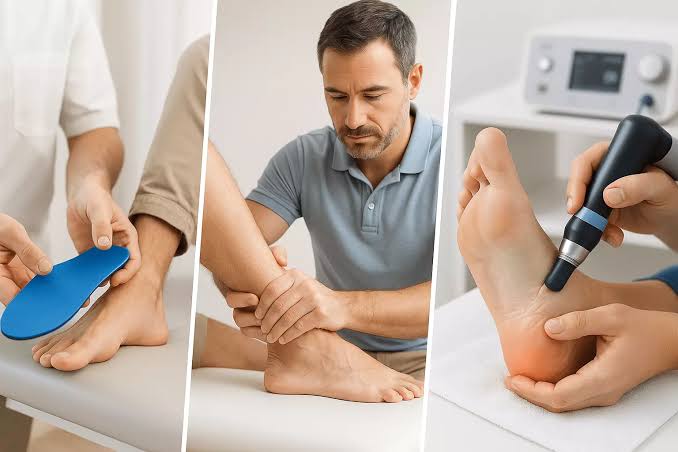
Custom orthotics are shoe inserts that fit the unique shape of a person’s feet, and they are made from a mold, scan, or impression taken during an appointment. A podiatrist may also perform a gait analysis to evaluate how the feet move while walking. Orthotics can help redistribute pressure away from the heel and provide support to the arch. Rigid orthotics are typically made from plastic or carbon fiber and are designed to control motion, while soft orthotics use cushioning materials such as foam for extra shock absorption. During follow-up visits, the podiatrist can check the fit and make adjustments as needed.
Manage Heel Pain With Podiatry Support
Heel pain results from fractures, soft tissue strain, or structural differences, but a podiatrist can evaluate your symptoms. Podiatry treatment plans may combine more than one approach depending on the cause and severity of your pain. To get personalized medical advice, schedule an appointment with a podiatrist to discuss your pain and learn which lifestyle changes may support your foot health.




