

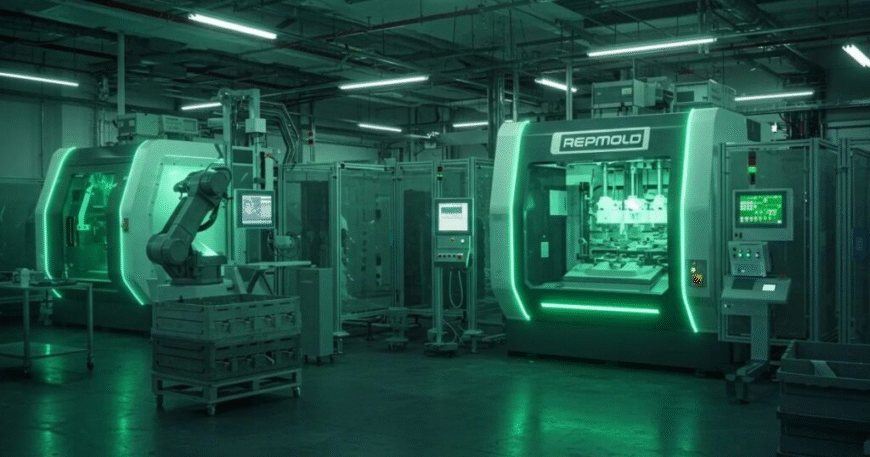
Repmold: A Complete Guide to Its Meaning, Uses, Benefits, and Industry Impact

Repmold is a term that has been gaining steady attention across manufacturing, product development, and design-focused industries. While often misunderstood or loosely defined, Repmold represents a practical solution aimed at improving efficiency, reducing production costs, and extending the lifecycle of existing products or molds.
This guide provides a clear, in-depth explanation of Repmold, how it works, where it is used, and why it matters. Whether you are a business owner, product designer, engineer, or simply researching the term, this article offers reliable insights that go beyond surface-level explanations.
What Is Repmold?
Repmold refers to the process or concept of replacing, replicating, or restoring molds used in manufacturing and production environments. Instead of creating an entirely new mold from scratch, Repmold focuses on rebuilding or reproducing an existing mold to maintain consistency while minimizing cost and downtime.
Core Characteristics of Repmold
- Replication of original mold specifications
- Restoration of worn or damaged molds
- Cost-effective alternative to new mold creation
- Maintains product uniformity
- Shorter production turnaround times
Repmold is commonly applied in industries where molds are central to production, such as plastics, automotive parts, consumer goods, and industrial manufacturing.
How Repmold Works
The Repmold process follows a structured approach to ensure accuracy and durability.
Step-by-Step Repmold Process
- Mold Assessment
The original mold is inspected for wear, damage, and design accuracy. - Digital or Physical Mapping
Measurements are captured using scanning or precision tools. - Material Selection
Materials are chosen based on durability, usage frequency, and production volume. - Replication or Restoration
The mold is rebuilt or reproduced using modern manufacturing techniques. - Testing and Validation
Final testing ensures the Repmold meets performance standards.
Why Repmold Is Important in Modern Manufacturing
As production demands increase, manufacturers face constant pressure to deliver quality products while controlling costs. Repmold provides a strategic advantage by solving several common challenges.
Key Industry Challenges Repmold Addresses
| Challenge | How Repmold Helps |
|---|---|
| High mold replacement costs | Reduces expenses significantly |
| Production downtime | Faster turnaround than new molds |
| Design consistency | Maintains original specifications |
| Resource waste | Extends mold lifespan |
| Scaling production | Enables quick replication |
Benefits of Using Repmold
1. Cost Efficiency
Creating a new mold can be expensive and time-consuming. Repmold offers a budget-friendly alternative without compromising quality.
2. Faster Production Cycles
Repmold reduces lead times, allowing businesses to resume production faster.
3. Consistent Product Quality
By replicating existing molds, Repmold ensures uniformity across production batches.
4. Sustainability Advantages
- Less raw material waste
- Reduced energy consumption
- Extended equipment lifespan
5. Flexible Application
Repmold can be adapted for both small-scale and large-scale manufacturing environments.
Industries That Commonly Use Repmold
Repmold is not limited to one sector. Its flexibility makes it suitable across various industries.
Primary Industries Using Repmold
- Plastic Manufacturing
- Automotive Components
- Consumer Goods
- Medical Equipment
- Industrial Tooling
- Packaging Solutions
Each industry benefits from Repmold’s ability to maintain precision while optimizing production resources.
Repmold vs Traditional Mold Replacement
Understanding the difference between Repmold and traditional mold creation helps clarify its value.
| Feature | Repmold | Traditional Mold |
|---|---|---|
| Cost | Lower | Higher |
| Time to Production | Faster | Slower |
| Design Changes | Minimal | Flexible |
| Sustainability | High | Moderate |
| Risk Level | Lower | Higher |
Repmold is ideal when consistency is critical, while traditional molds may be better for new or heavily modified designs.
When Should You Choose Repmold?
Repmold is most effective in specific scenarios:
- Existing mold design performs well
- Mold wear affects production quality
- Budget constraints limit new tooling
- Time-sensitive production schedules
- Long-term production consistency is required
If frequent design changes are needed, a new mold may be more appropriate.
Common Misconceptions About Repmold
“Repmold Means Lower Quality”
False. When done correctly, Repmold meets or exceeds original mold standards.
“Repmold Is Only for Large Companies”
Incorrect. Small and mid-sized businesses often benefit the most from Repmold.
“Repmold Limits Innovation”
Repmold preserves proven designs while allowing controlled improvements where needed.
Best Practices for Successful Repmold Projects
To maximize results, follow these proven strategies:
- Work with experienced mold specialists
- Conduct thorough mold inspections
- Use high-quality replication materials
- Test molds before full production
- Document design specifications carefully
Proper planning ensures that Repmold delivers consistent performance over time.
Future Trends in Repmold Technology
Repmold continues to evolve with advancements in manufacturing technology.
Emerging Developments
- 3D scanning for precision mapping
- Advanced material composites
- Improved mold lifespan analytics
- Integration with digital manufacturing systems
These innovations are making Repmold more reliable, efficient, and scalable than ever before.
Why Repmold Is Gaining Global Attention
The global push for cost efficiency, sustainability, and faster production has increased demand for solutions like Repmold. Businesses are recognizing that smarter replication strategies can outperform traditional replacement methods.
As industries continue to modernize, Repmold stands out as a practical, results-driven approach.
Frequently Asked Questions (FAQs)
1. What does Repmold mean?
Repmold refers to the process of replicating or restoring existing molds instead of creating entirely new ones.
2. Is Repmold suitable for high-volume production?
Yes, Repmold is commonly used in high-volume manufacturing where consistency is critical.
3. How long does a Repmold process take?
Timelines vary, but Repmold is typically much faster than producing a new mold from scratch.
4. Does Repmold affect product quality?
When properly executed, Repmold maintains or improves product quality.
5. Is Repmold environmentally friendly?
Yes, Repmold reduces material waste and energy use, supporting sustainable manufacturing practices.
Final Thoughts on Repmold
Repmold is more than a cost-saving method—it is a strategic manufacturing solution that balances efficiency, quality, and sustainability. By extending the life of existing molds and ensuring production consistency, Repmold helps businesses remain competitive in fast-moving markets.
For companies seeking smarter production methods without sacrificing performance, Repmold offers a proven, practical, and future-ready approach.