
Exercises to Alleviate Symptoms of Flat Feet

Flat feet can affect foot alignment, balance, and daily movement. Targeted exercises may strengthen the muscles that support the arches, improve flexibility, and reduce discomfort during standing or walking. Here are some exercises that may alleviate symptoms of flat feet:
Strengthening Foot Muscles
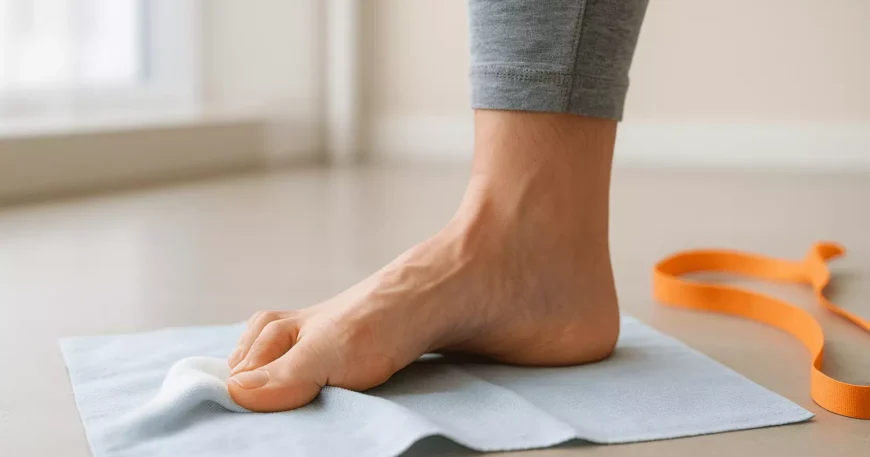
Strengthening the small muscles within the foot builds a supportive foundation that can alleviate flat feet. When you perform towel scrunches, the intrinsic foot muscles contract to lift the arch. Place a small towel on the floor and use your toes to pull the fabric toward your heel. Another helpful exercise involves lifting the heels completely off the ground. As you rise onto your toes, the posterior tibial tendon works to stabilize the foot. This movement reinforces the arch structure, and it gradually increases your weight-bearing capacity.
Arch lifts isolate the specific muscles responsible for maintaining proper foot posture. While keeping your heel and toes on the floor, you actively pull the middle of your foot upward. This controlled action trains the tissues, but you must avoid curling your toes.
Improving Arch Support
Tight calf muscles place excessive stress on the foot and ankle structures. When the Achilles tendon lacks flexibility, it forces the arch to flatten during walking. The wall stretch provides a fundamental method for lengthening the calf muscles. You stand facing a wall, with one foot positioned behind the other, creating a gentle stretch in the rear leg. The back knee remains straight, and the heel stays firmly planted on the floor. A seated stretch offers another way to improve lower leg flexibility. As you sit on the floor, you wrap a resistance band around the top of your foot. You pull the band toward your body, and the calf muscle elongates safely.
Controlling Balance and Walking
Proper balance mechanisms prevent the ankles from rolling inward during movement. If you practice single-leg stands, your body learns to maintain stability over a flat arch. Walking barefoot on uneven surfaces like sand provides natural sensory feedback. Although this environment challenges your stability, it forces the foot muscles to activate continuously. The arches work harder to grip the ground, and your stride becomes more efficient over time.
Heel-to-toe walking further refines your coordination and joint alignment. When you place one foot directly in front of the other, the base of support narrows significantly. This exercise demands precise muscle control, and it can train the foot to distribute weight evenly.
Practicing Safe Exercise
Establishing safe routines prevents further strain on flat feet. Before you begin any new regimen, prepare properly to limit the risk of injury. Here are specific guidelines that can protect your lower extremities:
- Wear supportive footwear: Make sure your shoes provide adequate arch support during dynamic physical activities.
- Start slowly: Gradually increase your workout duration to prevent severe muscle fatigue.
- Monitor discomfort: Stop the exercise immediately if you experience sharp pain in the heel or ankle.
- Rest adequately: Allow your muscles ample time to recover between intense training sessions.
These safety habits form the basis of a sustainable physical therapy plan. Paying attention to your body’s signals prevents overuse injuries, which often complicate recovery.
Schedule Your Flat Feet Appointment
Flat feet require targeted clinical interventions to minimize pain and improve daily function. Exploring the role of custom orthotics can further enhance support and alleviate discomfort. Custom inserts are designed to distribute pressure evenly, and they can improve overall foot alignment. Contact a qualified podiatrist in your area to schedule your appointment for flat feet today.