

How Are Plantar Warts Treated?

The human foot sustains the full weight of the body during daily activities, and any irregularity on the surface of the foot can lead to discomfort and disrupt regular movement. Among the various conditions that affect the lower extremities, plantar warts may develop. Understanding the basic facts about these lesions helps individuals take appropriate steps toward managing their foot health.
What Are Plantar Warts?
Plantar warts originate from an infection caused by the human papillomavirus, commonly known as HPV. This specific group of virus strains affects the outer layer of the skin on the bottom of the feet. These growths typically manifest on the heels or the balls of the feet. These areas sustain the most pressure during walking and standing, and the pressure may force the wart to grow inward beneath a thick layer of hardened skin.
The human papillomavirus thrives in warm and moist environments. Public spaces such as community swimming pools, locker rooms, and communal showers frequently harbor the virus, and walking barefoot in these areas increases the likelihood of exposure. The virus enters the body through microscopic lacerations, scrapes, or weakened areas of the skin on the sole. Once the virus penetrates the outer skin barrier, it stimulates the rapid growth of cells on the surface, creating the characteristic bump. Direct contact with an infected surface or individual facilitates the transmission of the virus.
What Are the Signs?
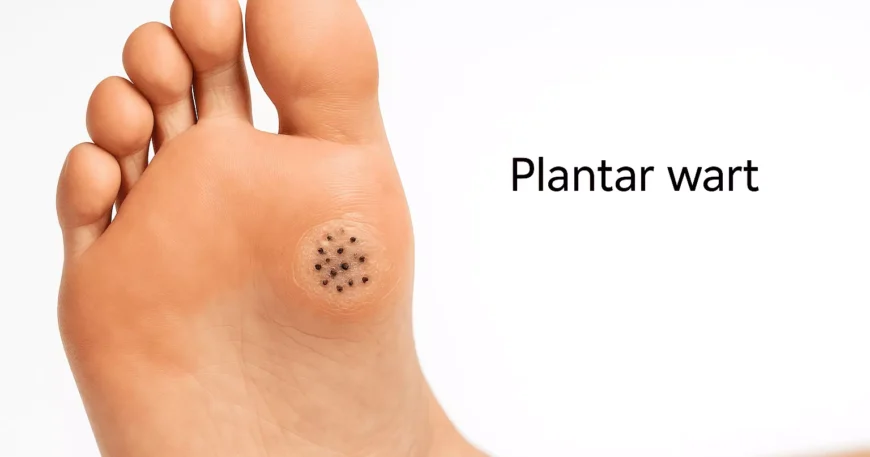
Identifying plantar warts requires regular observation of the skin on the bottom of the foot. These growths typically appear as small, rough-textured lesions. Due to the constant pressure placed on the feet, they often resemble a thick callus. A distinguishing feature of this condition is the presence of small black dots near the center of the lesion; these dark spots are tiny, clotted blood vessels that supply the growth with nutrients. Individuals may experience tenderness or pain when applying pressure to the affected foot. Walking or standing for extended periods can exacerbate this discomfort.
How Are They Treated?
Some minor skin anomalies resolve independently, but persistent or painful growths may warrant professional intervention. Medical practitioners utilize several targeted approaches to address these lesions based on the severity and duration of the infection. One common method involves the application of prescription-strength salicylic acid. This topical treatment gradually dissolves the growth by removing it one layer at a time. Cryotherapy offers another standard approach. During this procedure, a podiatrist applies liquid nitrogen to freeze the affected tissue. The intense cold causes a blister to form around the lesion, and the dead tissue eventually sloughs off within a few weeks.
For more stubborn cases, laser therapy provides an alternative. The laser directs intense light energy to close off the microscopic blood vessels feeding the growth. Without a blood supply, the tissue deteriorates and separates from the healthy skin. In situations where non-invasive therapies yield insufficient results, minor surgical excision remains an option. A specialist physically extracts the growth and the immediate surrounding tissue using specialized clinical instruments.
Confer With a Podiatrist
Preventing the transmission and recurrence of the human papillomavirus requires diligent foot hygiene, including adopting some basic practices. Wearing protective water shoes or sandals in public showers and similar facilities significantly reduces exposure risks. Treating your feet with care supports your overall mobility and physical well-being. Podiatrists possess the expertise to accurately diagnose foot conditions and tailor an appropriate plan of action.




