

When Should I Receive Hair Restoration Treatments?

Hair thinning and hair loss affect many adults at different stages of life. Changes in hair density often develop gradually over several years, or they can become more noticeable after periods of stress or hormonal shifts. Men and women may notice a widening part, a receding hairline, or reduced fullness at the crown. Platelet-rich plasma (PRP) hair restoration is an available option for people who prefer to explore less invasive methods. Learning how the process works, as well as when someone should seek it out, helps individuals make informed decisions with a professional.
What Is PRP Hair Restoration?
Platelet-rich plasma is a concentrated portion of blood that contains more platelets than normal circulating blood. Platelets are small cell fragments, which are known for their role in clotting. They also carry proteins called growth factors, and these are the focus of PRP hair restoration. The procedure generally takes place in an outpatient setting and follows a series of steps:
- Blood Draw: A provider collects a small sample of blood, similar to a routine laboratory test.
- Separation: The sample is placed in a centrifuge, a device that spins rapidly to separate blood into layers.
- Preparation: The provider isolates the platelet-rich layer from the red blood cells and other components.
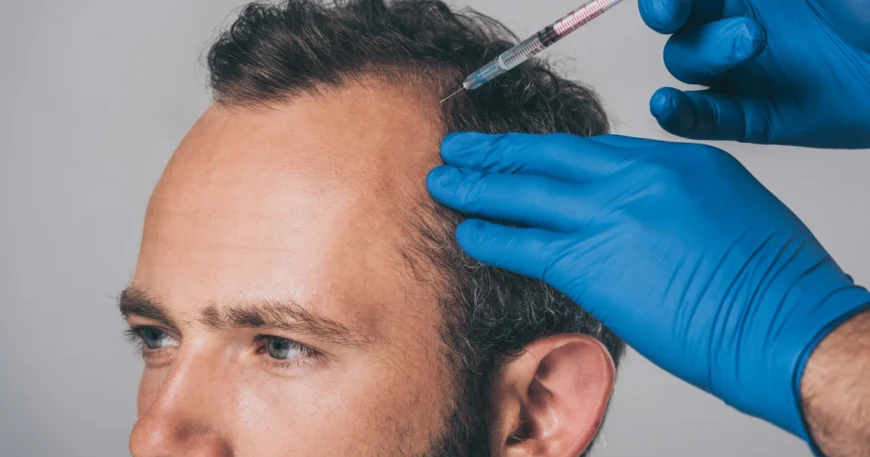
- Application: The concentrated plasma is delivered to targeted areas of the scalp through a series of small injections.
PRP hair restoration is usually performed as a series of sessions spaced several weeks apart. The number and timing of sessions vary based on the provider’s assessment and the individual’s goals.
Who Is It For?
Suitability for PRP hair restoration depends on several personal factors, and a professional provider is the appropriate source for an individual evaluation. The procedure can be discussed with adults in the early or moderate stages of hair thinning. People whose hair follicles remain present, even if the hair they produce has become finer, may benefit from this approach.
People who are suitable for PRP hair restoration can share a few common characteristics. Good overall health and a willingness to attend multiple sessions are all necessary factors. PRP therapy is not the right fit for everyone; those who take blood-thinning medications or smoke may receive different guidance. Before suggesting a course of action, a provider can review your medical history and the pattern of your hair loss to determine what approach is best for you.
What Are the Benefits?
People who choose PRP hair restoration may experience certain practical advantages related to the nature of the procedure. Results vary from person to person, and no specific outcome can be guaranteed. Commonly noted benefits vary, including:
- Minimally Invasive Process: The procedure involves injections rather than incisions and does not require the surgical transplantation of tissue.
- Natively Sourced: Because the plasma comes from the person receiving it, the procedure does not rely on synthetic or donor materials.
- Limited Downtime: People typically resume daily activities soon after a session.
The approach can also be adjusted over time. Providers may modify the frequency of sessions based on how a person’s hair responds.
Seek Professional Aesthetic Services
Changes from PRP hair restoration, when they occur, tend to develop gradually. Providers may suggest allowing several months after an initial series before assessing the overall response. An aesthetic professional is able to explain how PRP therapy fits within a personalized plan, and they can outline each step from the initial assessment through ongoing maintenance.




