
How Sports Medicine Specialists Enhance Athletic Performance

Sports medicine is a specialized field that focuses on evaluating, managing, and preventing injuries related to physical activity. Specialists in this field treat a wide range of concerns, from muscle strains to tendon tears. They provide a structured, assessment-driven approach to performance, and they can work with competitive athletes and active individuals alike. Here are several ways these professionals help enhance athletic performance:
Assess Injuries and Analyze Movement
Before developing a management plan, a sports medicine specialist conducts a comprehensive evaluation. This assessment examines the injury itself, the surrounding anatomical structures, movement patterns, and the contributing factors that may have led to the condition. Unique injuries present differently, and this initial evaluation helps establish an accurate clinical baseline. It also makes sure subsequent treatment decisions are based on a comprehensive understanding of the presenting issue.
Acute injuries such as dislocations require assessment to determine the extent of joint involvement and identify affected structures. Overuse injuries develop gradually through repetitive stress, so the evaluation may review training load, movement technique, and underlying biomechanical contributors. While acute injuries often present with a clear onset, overuse conditions are sometimes more subtle and require careful pattern recognition. This distinction allows clinicians to differentiate between isolated events and chronic stress patterns that inform treatment planning.
Manage Athletic Injuries
Sports medicine specialists address a wide range of injuries that affect athletes at every level. This includes:
- Dislocations: Joint dislocations, particularly at the shoulder, require careful evaluation of ligament and soft tissue involvement before any return to activity.
- Muscle strains: Graded by severity, strains demand a structured recovery timeline that accounts for tissue healing and progressive loading.
- Overuse injuries: Conditions like tendinopathy, stress reactions, and bursitis develop through repetitive loading and respond to changes in training volume and mechanics.
- Rotator cuff tears: Tears range from partial to full thickness and require an approach tailored to the individual’s activity demands and injury characteristics.
Coordinate Rehabilitation and Recovery
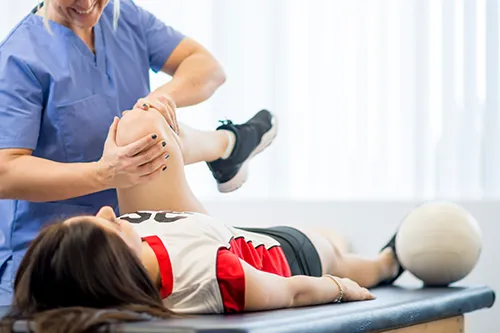
Rehabilitation after a sports injury requires a coordinated approach involving several healthcare professionals. Specialists may work with physical therapists, athletic trainers, and other clinicians to create a step-by-step recovery plan. Since every injury and athlete responds differently, careful pacing is key throughout rehab. Progressing too quickly can increase the risk of re-injury, and moving too slowly sometimes delays return to activity. Clinicians monitor progress at each stage and adjust the plan as needed to promote a safe, steady recovery.
Find a Sports Medicine Specialist
A sports medicine specialist provides structured return-to-play guidance after injury; they help athletes safely resume activity through a staged recovery plan. This plan confirms healing and functional readiness before full sport participation. The process involves objective measures such as strength testing and movement screening; it also includes sport-specific benchmarks. Podiatrists help create a consistent standard for safe progression. Because every athlete and injury responds differently, specialists adjust rehabilitation plans based on ongoing evaluation. This supports appropriate recovery pacing and reduces the risk of re-injury. To learn more about enhancing athletic performance, contact a qualified podiatrist and schedule an appointment.