

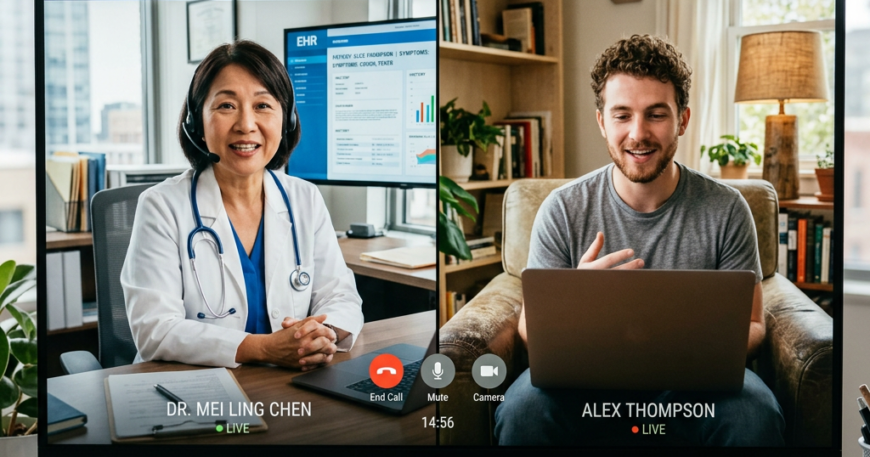
How Telemedicine Doctors Are Enhancing Follow-up Care for Patients

When patients require ongoing monitoring after an appointment, telemedicine doctors enhance follow-up care by providing remote check-ins and real-time symptom tracking. Patients receive consistent monitoring without repeated office visits, and this may improve treatment adherence. It also allows providers to catch complications earlier. Here is more information on what telemedicine doctors do and what follow-up care involves:
What Is a Telemedicine Doctor?
A telemedicine doctor is a licensed physician who delivers medical care remotely by phone and computer. They diagnose conditions, prescribe medications, and review test results, all without requiring an in-person visit. Telemedicine doctors follow the same clinical standards as in-office physicians, and they review patient history and order lab work when needed. Care happens through a screen rather than an exam room. This distinction removes travel time and scheduling conflicts, which is particularly beneficial for patients who live far from a clinic or have limited mobility.
What Is Follow-up Care?
Follow-up care refers to the ongoing medical attention a patient receives after an initial diagnosis, procedure, or treatment. It tracks recovery progress, and it helps confirm that a treatment plan is working. Providers identify complications early, which makes it an integral part of comprehensive healthcare. Doctors may schedule follow-up visits after surgeries, hospital discharges, and the start of new medications or therapies.
Without consistent follow-up, patients risk missing warning signs. A surgical wound may become infected, and some new prescriptions cause side effects. These oversights have the potential to lead to serious medical complications. When patients need continued monitoring after diagnosis, follow-up care keeps them connected with their providers throughout recovery.
What Does It Involve?
Follow-up care encompasses several structured components designed to monitor and support patient recovery. These typically include:
- Reviewing symptoms and assessing physical indicators such as vital signs or wound healing
- Adjusting medications and ordering additional tests based on observed progress
- Addressing patient questions and tracking responses to new treatments or therapies
The frequency and format of follow-up care vary depending on the condition being treated. Each follow-up builds on the last, creating a continuous, detailed record of the patient’s progress.
How Is Follow-up Care Enhanced?
Telemedicine has changed follow-up care by removing certain logistical barriers. Video visits let doctors assess recovery visually; they also allow providers to review lab results and adjust treatment plans in real time. Patients who experience difficulties attending in-person appointments benefit from this format, as it maintains continuity of care without requiring physical presence.
Telemedicine helps shorten the wait time between noticing a symptom and speaking with a doctor. A patient who develops a rash after starting a new medication can seek prompt medical attention, and providers offer patient-specific guidance. When response times are reduced, patients may be more likely to act on early warning signs rather than delay seeking input.
Seek Follow-up Care Now
Telemedicine doctors have enhanced follow-up care by providing prompt, comprehensive medical care. Virtual check-ins and faster communication channels all work together to catch complications early, and they help keep treatment plans on track. If you are recovering from surgery, managing chronic conditions, or adjusting to new medications, schedule a follow-up appointment.




