

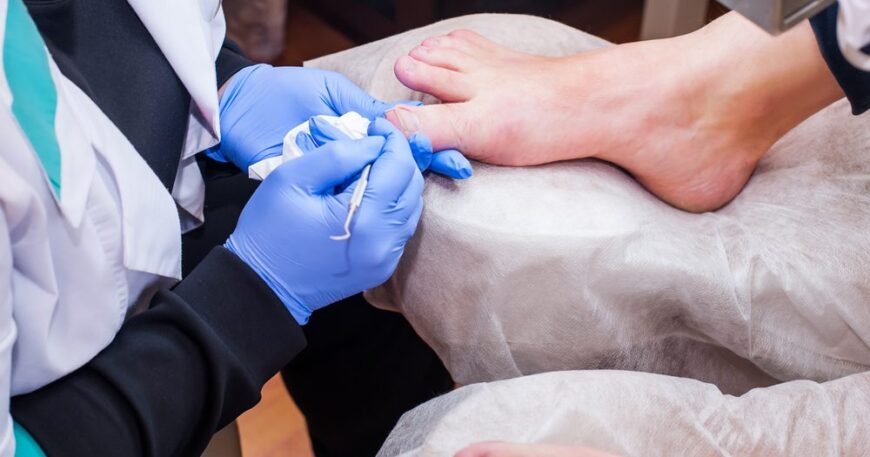
How To Prevent and Treat Ingrown Toenails

Foot health remains a significant aspect of overall physical well-being. Because the lower extremities bear such a heavy load, even minor abnormalities can result in pronounced discomfort. Ingrown toenails affect individuals across all age groups and activity levels. Some cases resolve with minor adjustments to personal care routines, but others progress into more severe states requiring professional intervention.
What Are Ingrown Toenails?
Ingrown toenails develop when the border or corner of the nail grows downward into the adjacent skin. Instead of resting flat and extending forward, the rigid nail material pierces the soft tissue. Once the skin opens, bacteria naturally present on the surface of the foot can enter the wound. This bacterial exposure regularly leads to localized infections, and patients typically notice distinct physical symptoms in the affected area.
The surrounding tissue usually becomes red, swollen, and tender to the touch. In cases where an infection has taken hold, patients might observe fluid or pus draining from the site. The big toe is the most frequent location for this condition, but it can occur on any digit. The constant pressure from walking may exacerbate the friction between the nail and the inflamed tissue, compounding the physical discomfort.
How Can They Be Prevented?
Several distinct factors contribute to the downward growth of toenails, such as footwear. Shoes that fit too tightly compress the toes together and force the nail edge to press into the surrounding flesh. High-heeled shoes or narrow-pointed boots regularly create this restrictive environment.
Trimming techniques also play a role. Cutting the nails too short or tapering the edges down into the corners encourages the newly growing nail to embed itself into the skin. Physical trauma to the foot represents another frequent cause. Dropping a heavy object on the toe or stubbing it against a hard surface can alter the nail’s growth trajectory. Some individuals have unusually curved nails, making them naturally prone to this condition.
Preventing this issue requires adopting specific foot care habits. Selecting properly fitted footwear gives the digits adequate room to move without compression. When trimming nails, individuals should cut them straight across rather than rounding the edges. Leaving the nail slightly longer than the tip of the toe prevents the corners from sinking into the soft tissue, and wearing protective footwear in environments where injuries might occur serves as another effective preventative measure.
How Are They Treated?
Medical professionals evaluate the severity of the symptoms to determine the most appropriate course of action. For mild cases without significant infection, a podiatrist might gently lift the embedded nail. Placing a small splint beneath the elevated edge directs the nail to grow outward and prevents the nail from growing downward.
When an infection is present, the provider might recommend a partial nail removal. This routine in-office procedure begins with the administration of a local anesthetic to numb the toe. The podiatrist then carefully excises the specific portion of the nail penetrating the skin. Following the removal, the doctor might prescribe oral antibiotics to clear the underlying infection and promote proper healing. For patients experiencing chronic, recurring episodes on the same toe, a more permanent solution can become necessary. The podiatrist may perform a full removal of the offending nail and underlying tissue.
Speak With a Podiatrist
Seeking a professional medical evaluation at the first sign of discomfort remains the safest approach. A minor skin breach from a nail can rapidly deteriorate into a severe medical complication, leaving individuals with conditions like diabetes at greater risk of worsened foot health. A licensed podiatrist may provide an accurate diagnosis and implement a safe treatment plan tailored to a patient’s specific health profile.