
The Role of Botox in Non-Surgical Aesthetic Treatments

Botox is a widely performed non-surgical aesthetic treatment. It offers a way to soften facial lines without incisions, general anesthesia, or extended recovery. When a qualified, experienced provider administers the injections, results can appear refreshed and natural while preserving facial expression. Learn more about the role of Botox in non-surgical aesthetic treatments.
Eye Wrinkles
The fine lines that radiate from the outer corners of the eyes are known as lateral canthal lines, or crow’s feet. They develop from repeated contraction of the orbicularis oculi, the circular muscle that surrounds the eye. Smiling, laughing, and squinting all engage this muscle, which explains why crow’s feet can be among the first wrinkles to appear.
Botox provides a temporary solution to crow’s feet. A provider places small, precise injections along the outer eye area to relax the muscle while maintaining a natural smile. Patients generally notice improvement within several days, with full results visible a few weeks later; results last a few months.
Chin Cobblestones and Dimples
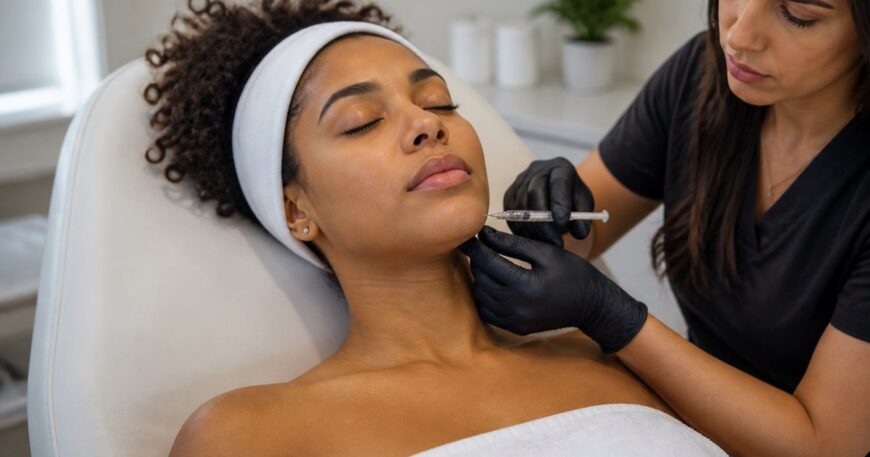
Some individuals develop a dimpled, uneven texture on the chin, often described as “cobblestone” or “orange peel” chin. This texture results from an overactive mentalis muscle, which controls movement of the chin and lower lip. The appearance may become more noticeable during speech or when the lips are pressed together.
Small doses of Botox can relax the mentalis muscle, creating a smoother and more even chin contour. Treatment may also soften the horizontal crease that sometimes forms between the lower lip and chin. When the chin has also lost volume, providers may recommend combining Botox with dermal filler for a more balanced result.
Lines Around the Mouth
Vertical lines above the upper lip, sometimes called perioral lines, form through repeated puckering motions such as speaking, drinking through a straw, or smoking. These lines result from activity in the orbicularis oris, the muscle that encircles the mouth. Very small doses of Botox can soften these lines and may also create a subtle “lip flip,” which gently enhances the upper lip.
Botox can also address the downturned corners of the mouth. By relaxing the depressor anguli oris muscle, a provider can lift the corners of the mouth and reduce the appearance of marionette lines. Deeper, static lines may respond best when Botox is combined with fillers or skin resurfacing treatments.
Forehead Wrinkles
Horizontal forehead lines form when the frontalis muscle lifts the eyebrows, a movement many people make unconsciously throughout the day. The vertical “11” lines between the brows, known as glabellar lines, are caused by the corrugator and procerus muscles. Botox is approved for both forehead lines and glabellar lines.
Because the frontalis muscle elevates the brows, excessive relaxation may cause a heavy or lowered brow position. Skilled providers often treat the forehead and glabellar region together to maintain balance and a natural appearance. Patients may also choose treatment younger to help prevent fine lines from becoming deeply set.
Consider Getting Botox
Botox offers a minimally invasive approach to softening wrinkles across multiple areas of the face. A personalized consultation is the most reliable way to determine whether Botox suits your aesthetic goals. A qualified provider can evaluate your facial anatomy, discuss realistic outcomes, and design a treatment plan that preserves your natural expression.
- How to Match Your Eye Care Needs With the Right Kind of Visit in Warrenton
- FAQs About Urologists and Their Practices
- The Impact of Peripheral Neuropathy on Daily Life and Coping Mechanisms
- How SkinPen Microneedling Can Help with Fine Lines and Wrinkles
- Understanding the Long-Term Effects of Skin Tightening